
Wall insulation in Los Banos CA - every bay packed full, rooms that hold steady
Rooms that run hot all summer and cold all winter usually have thin or empty walls. We fill them from outside without tearing out drywall.
- Licensed and insured.
- Free quotes on site.
- Replies within 1 business day.
What does wall insulation do for a house in Los Banos?
Wall insulation fills the hollow spaces between the studs in your walls, called cavities, so heat moves through them slower and your rooms in Los Banos stay cooler in summer, hold heat in winter and let in less outside noise. On a finished house we usually blow it in from outside, so your inside walls stay as they are.
Most wall calls I get start with a room that won't stay comfortable, often in an older house where nobody's sure what's behind the drywall. The price mostly turns on how much wall you're filling, what kind of siding has to come off and go back, and whether I find a leak, a wet spot or old wiring that has to be fixed first, and the schedule turns on those same things plus any permit the job needs. Some houses need attic insulation more than they need walls, and I'll tell you if yours is one of them. The written estimate puts each part of the job on its own line, so you see your own figure before anything starts.
How do you know your walls are short on insulation?
One room won't stay comfortable
A west-facing bedroom that's still hot at bedtime, or a back room that's cold every winter morning, usually points to walls that are empty or only partly filled. Until that's fixed, the AC and heater run longer for that one room, and the power bill shows it.
Walls cold to the touch
If an outside wall feels cold on your palm in winter, or you feel air moving at the outlets, there's little or nothing in that cavity slowing the heat. Waiting doesn't damage anything, but every season you're paying to heat or cool the outdoors.
Road noise comes right through
Hearing traffic, the neighbor's dog or the wind as if a window were open usually means hollow walls, because insulation slows sound as well as heat. That one won't get better on its own, and it tends to bother you more the longer you live there.
How we do wall insulation
I start by checking the walls inside and out for leaks, wet spots and old wiring, and for any wall spaces your heating or cooling uses to move air, because insulation laid over a problem just hides it and those air bays have to stay empty. Then our crew loosens or removes siding where it's needed and drills an access hole into each bay. With blown-in walls the job comes down to how tight each cavity gets packed, so we fill every bay full and skip only the ones carrying air for your heating or cooling. After that we plug and seal every hole and put the siding and the water barrier behind it back right, so the wall sheds rain the way it did before.
Insulation slows heat, but it can't stop air pouring through gaps at outlets, top plates and window trim, so we often pair walls with air sealing services, which close those gaps before the fill goes in. If your house has a basement or lower level that stays cold, basement insulation treats those walls too, and I write it up on its own line so you can decide whether it waits.
Blown-in for finished walls
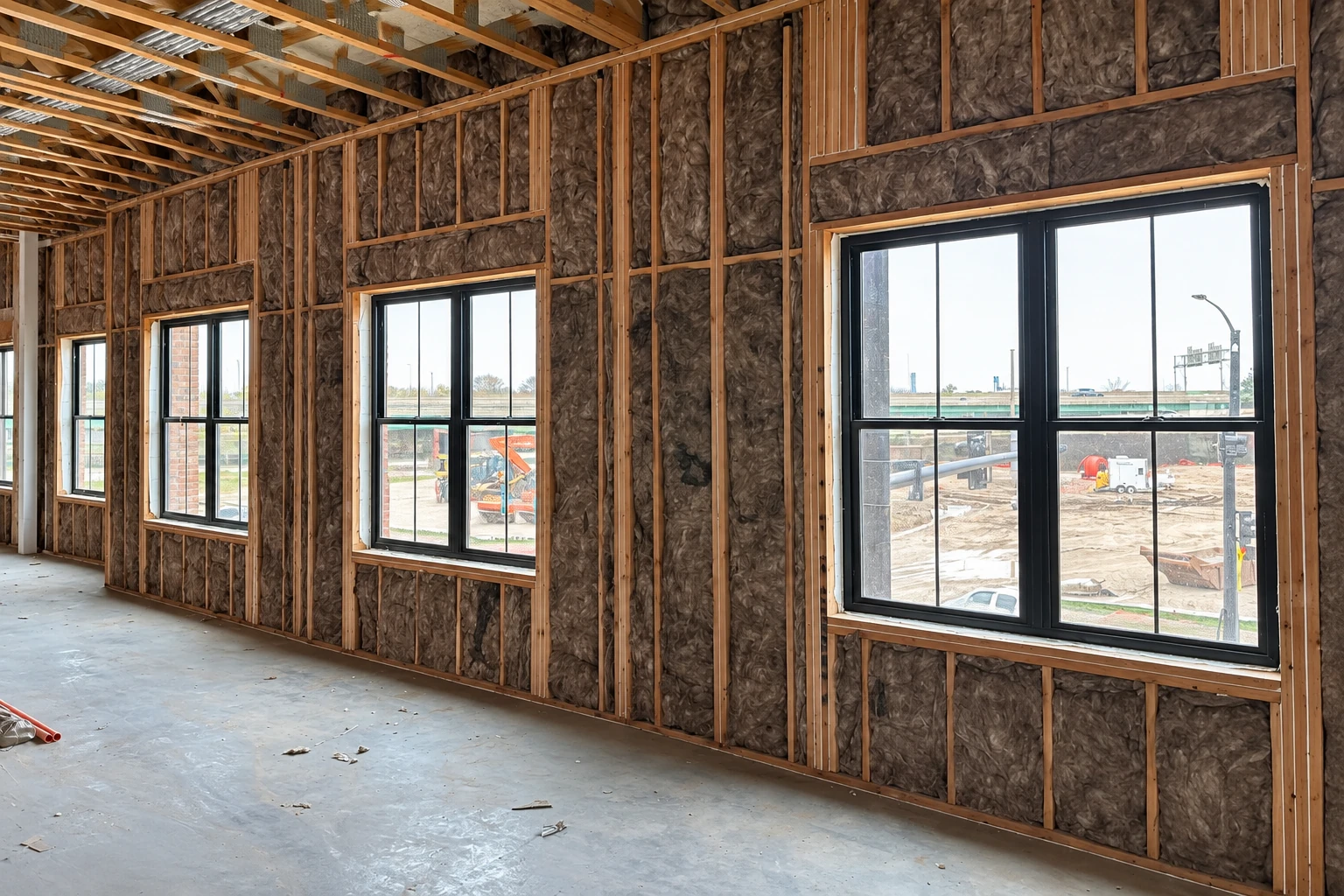
This suits most existing houses, because we fill the bays through small holes behind the siding and your drywall, paint and trim stay put.
Batts for open framing
Batts fit a remodel or an addition where the studs are bare, since the precut blankets go in quickly and you can see every bay before the wall closes.
Spray foam on open walls
Foam costs more, but it seals air while it insulates, so it earns its price on a leaky room over the garage or a shop wall. For most house walls I'd seal the gaps and use fill or batts instead.
Get a line-by-line estimate for your walls
We reply within one business day to set a time for me to come out. The visit is free and there's no pressure to book. I look over your walls in person, note anything that needs fixing first and give you a written estimate with each part of the job on its own line.
(209) 270-5807What changes wall insulation work in Los Banos
California's energy code splits the state into sixteen climate zones, and some of its standards for a home's outer shell depend on which zone the house sits in. Whether your wall job needs a permit isn't something I'll guess at. If it does, we pull it, set up the inspection and tell you before we start, and when it isn't clear, we ask the city or county building office first.
We're based in Los Banos and work in the cities around it, and the houses we open up here are often older wood-sided and stucco homes with empty or half-filled walls, where long valley afternoons show every gap on the west side. We see the same kinds of houses on jobs in Dos Palos and Gustine.
What happens after you call about wall insulation in Los Banos?
Call or send the form
You reach us at (209) 270-5807 or through the form. We get back to you and set a time for me to come to your house.
I check the walls first
I look over the walls inside and out and note anything that has to be fixed before we insulate. You get a written estimate with each part on its own line, so you can see what each piece costs and what can wait.
We prep, seal, then fill
If you go ahead, we take care of any permit the job needs and do the prep and sealing before any insulation goes in. Then the crew works along the wall one bay at a time.
We close up and walk it
Once every bay is full, we plug the holes and close the siding back up. Then I walk the finished job with you, and we leave your yard the way we found it.
Frequently asked questions
Is blown-in or batt insulation better for my walls?
For walls that are already closed up, blown-in is usually the better fit, because it fills oddly shaped spaces and works around pipes and wires without opening the drywall. Batts, the precut blankets, can be very cost effective when the studs are open and evenly spaced so the batts fit the bays. I'll tell you which one your framing calls for at the estimate.
How long does wall insulation last?
Properly installed cellulose can keep working for decades, according to the cellulose makers' trade group. The key word is properly, because the install decides how long you get the benefit far more than the material does.
What does wall insulation cost in Los Banos?
Across the US, installing blown-in wall insulation usually starts around $4 to $4.50 per square foot of wall. That's a national figure, not our price. Your number turns on how much wall there is, what siding has to come off and whether anything needs fixing first, and our written estimate breaks each of those out on its own line.
What license should an insulation contractor have in California?
Your installer should hold a license from the Contractors State License Board, whose insulation and acoustical class covers installing insulation for temperature or sound control. The board's published rule requires a license when labor and materials on a job total $500 or more. That figure comes from an older board brochure, so check the current number with the board.
How do I compare wall insulation quotes?
Ask each installer how they get blown-in fill dense enough that it won't settle, because fill that goes in too loose sinks over time and leaves empty spots in the wall. It's a fair question for every bid, ours included, and I'll show you how we pack each bay.
What is the best way to insulate walls without tearing out drywall?
Blowing insulation in from outside is usually the cleanest way, because the crew removes siding where needed and drills access holes so every empty bay gets filled. Vinyl, aluminum and steel siding can often be loosened with a siding tool. If your wall has a water barrier behind the siding, ask any crew how they'll repair it so water can't get in.
Los Banos, CA
Book a look at your walls
Have a rough idea of your wall area and siding type when you call, so I can plan the visit around your house.