
Home insulation in Los Banos CA - an upstairs that stays comfortable all summer
Hot upstairs, cold floors or a power bill that keeps climbing? We find where your house leaks heat and fix it in the right order.
- Licensed and insured.
- Free quotes on site.
- Replies within 1 business day.
Where is your Los Banos house losing heat, and what will it take to fix?
Home insulation in Los Banos means finding where your house lets heat in and out, fixing and sealing what needs it, then adding insulation to the attic, walls or floor where it counts. Insulation slows heat moving through it, and its R-value, a number for how well it does that, is how you compare one product with another.
Most people call because one room won't stay comfortable or nobody has checked the attic insulation in years. The price turns on how big the space is, how many inches are already up there, whether old material has to come out, how much sealing it needs and whether foam makes sense, and the schedule turns mostly on what has to be fixed before anything new goes in. My written estimate puts each part of the job on its own line, so you can see what your house needs and what can wait.
How do you know your house needs more insulation?
Upstairs rooms stay hot
If the AC runs all afternoon and the bedrooms upstairs still won't cool down, the attic insulation is usually thin, settled or leaking air around the edges. Every summer you wait, you're paying to cool the attic along with the house.
Cold floors in winter
Floors that feel cold under your feet usually mean the space under the house is bare or the old insulation has fallen down. Left alone, it keeps pulling heat out of the rooms above, and any ducts down there lose heat too.
Flat, dirty attic insulation
When you can see the tops of the ceiling joists, or the insulation looks stained, packed down or full of droppings, it's stopped doing much. Waiting lets the wet spot or the pests get worse, and it's the kind of problem that new insulation laid on top would only hide.
What our home insulation work includes
I start by going up into the attic, looking at the walls and getting under the floor, because most homes don't need everything and I'd rather point you to the spots where your money does the most good. On the job we fix whatever has to be repaired first, then do the air sealing, closing the gaps around can lights, pipes and the attic hatch, which is the order EPA recommends, so the new insulation isn't fighting a draft. Then we put in the material that suits each spot, keep the eave vents clear so the attic can still breathe, and carry the full depth out to the edges, where coverage usually runs thin. We clean up and leave your house the way we found it.
Some houses need more than a top-up. If the old material is soaked or full of droppings, it comes out first with our insulation removal work, because new insulation over it keeps the problem. If the cold is coming up through the floor, crawl space insulation often does more for you than another layer in the attic.
Air sealing and blown-in fill
This suits most attics with an open floor and no ductwork up there, because sealing the gaps and topping up with blown-in fill, loose insulation sent through a hose, gets you most of what foam does for a lot less. It's what I recommend in most houses.
Spray foam at the roofline
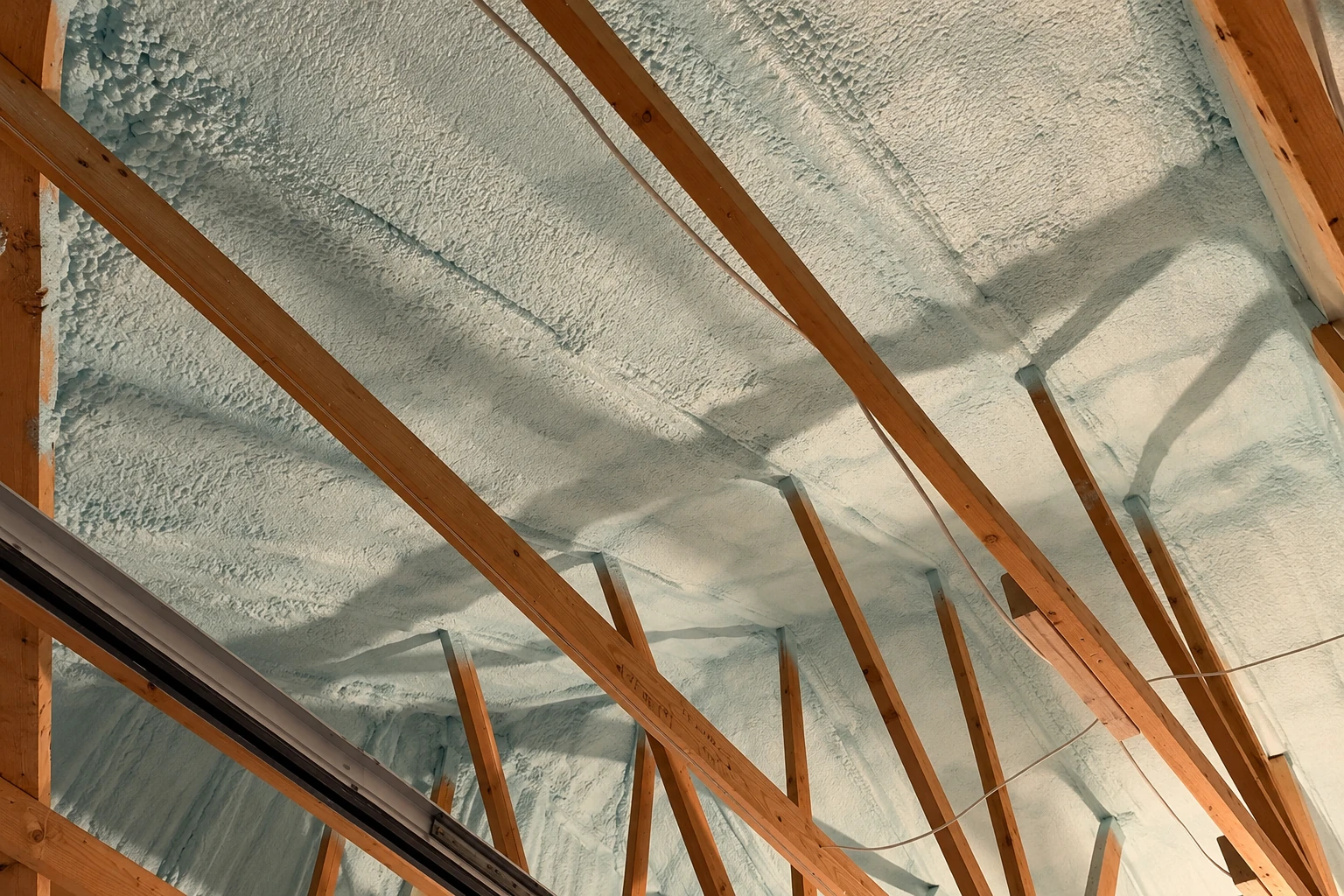
Foam costs more, but it seals air and insulates in the same pass, so it's the better pick when your ducts or furnace live in the attic and need to stay out of the heat. If they don't, I'll usually tell you to save the money.
Get a written insulation estimate for your house
Send the form and we'll get back to you within one business day to set a time for me to come out. I look over the attic, walls and floor in person and give you a free estimate with each part of the job on its own line. There's no pressure to book.
(209) 270-5807What shapes home insulation work in Los Banos
California's Energy Code sets efficiency rules for work on existing homes, not just new ones, and some of its standards for walls, roofs and floors depend on the climate zone a house sits in. So when we add insulation to an older house here, we plan the materials around the rules that apply to it, not around whatever's cheapest on the truck.
Summers here are long and hot, so the call we get most is an upstairs that won't cool down. The Department of Energy's insulation guide notes that a radiant barrier, a reflective layer under the roof, is especially useful in hot, sunny climates, and I'll bring it up when an attic bakes. We're based in Los Banos and work in the cities around it, and we hear the same complaint on jobs in Dos Palos and Gustine.
What happens when you call about insulating your Los Banos home?
Call or send the form
Call (209) 270-5807 or use the form, and we'll set a time for me to come out. It helps to know roughly how big the attic is and when the house was built.
I look the house over
I check the attic, walls and floor, note anything that has to be fixed first, and write the estimate with each part on its own line. That way you can see what each piece costs and choose what to do now and what can wait.
We fix, seal, then insulate
If you go ahead and the job needs a permit, we pull it and set up the inspection before we start, then do the repairs and sealing ahead of any insulation. When we're done, I walk the finished job with you.
Frequently asked questions
How much does attic insulation cost in Los Banos?
Across the US, attic insulation usually runs about $1 to $3 per square foot. That's the market's range for the attic alone, not our price, and walls, crawl spaces or hauling out old material are separate work. For your house, call (209) 270-5807 and I'll come measure.
Which insulation is best for my walls or attic?
Blown-in insulation, whether cellulose, fiberglass or mineral wool, is usually the fit for closed walls and open attic floors, according to ENERGY STAR's guidance, because it reaches places you can't get into. Sprayed foam also works on attic ceilings, but the same guidance rates it advanced work for a certified installer. Which one suits each spot in your house is what I sort out on the visit.
What should be fixed before insulating an attic?
Roof leaks and the wet insulation they leave, moldy rafters, vents that blow damp air into the attic and poor ventilation all call for a professional fix first. Old knob-and-tube wiring, found in houses built before 1930, can be a fire hazard where insulation touches it. New insulation laid over any of these only hides them, so we deal with them first.
What should I do if my attic has vermiculite insulation?
Leave it alone until an approved lab tests it and confirms it has no asbestos. Vermiculite is light, pea-size and flaky, usually gray, and some of it contains asbestos. If you decide to remove it, EPA advises hiring a trained, accredited asbestos abatement contractor who isn't the company that assessed it, so that's worth asking anyone you're considering.
Who is allowed to install insulation in California?
In California, insulation work falls under the C-2 Insulation and Acoustical Contractor classification, which covers installing any insulation for heat or sound control. You can look up a contractor's license with the state licensing board before you hire.
How long does attic insulation take, and do we have to leave the house?
ENERGY STAR puts an attic insulation project at about 1 to 2 days with a contractor, or 1 to 3 days if you do it yourself, and rates it moderate to difficult. Repairs or removal that have to happen first add to that. With spray foam, you, the kids and the pets stay out until the re-entry time, the point when it's safe to come back in, and I'll tell you when that is.
Los Banos, CA
Have us look at your attic first
If you know your attic's square footage, the year the house was built and anything you've noticed up there, the visit goes quicker and the estimate comes out closer.