
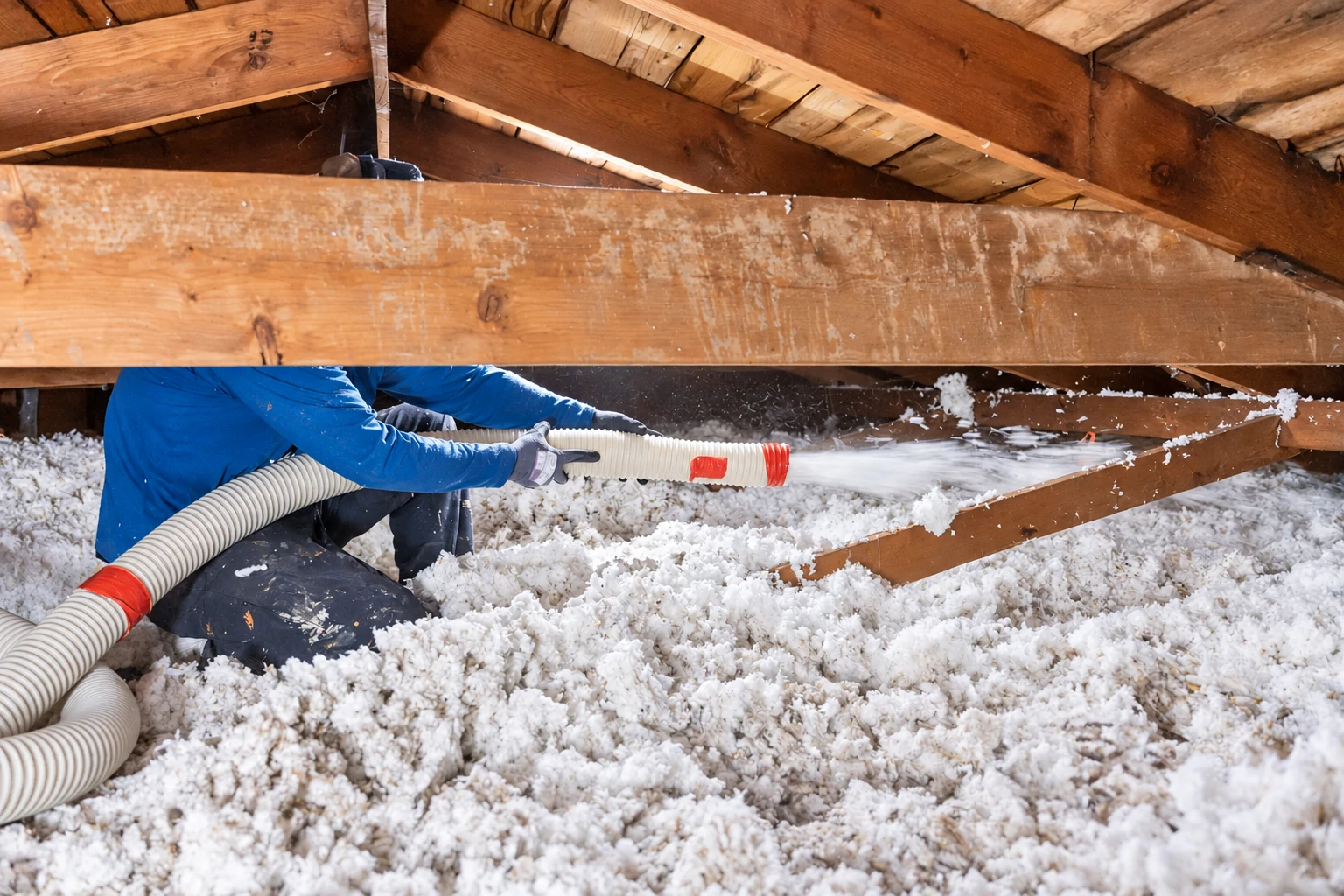
Blown-in insulation in Los Banos CA - an even layer that reaches the eaves
Hot upstairs rooms and a high power bill often trace back to a thin attic. We check it first, then blow in an even layer.
- Licensed and insured.
- Free quotes on site.
- Replies within 1 business day.
Does my attic need blown-in insulation?
Blown-in insulation is loose fill, usually cellulose or fiberglass, blown through a hose across your attic floor so your ceiling slows the heat moving in and out of the rooms below. In Los Banos a lot of attics just need a top-up over what's already there, and we're based here and work in the cities around it.
Most people call because a room won't stay comfortable, and the attic is the first place I look. The price mostly turns on how big the attic is, how many inches are already up there, whether the old layer is clean enough to keep, how many gaps need sealing and how easy the space is to get into. The schedule turns on the same things, plus any repair that has to come before the insulation, like a roof leak or old wiring. Your estimate puts each of those on its own line, so you see your own number instead of a guess.
How can you tell your attic insulation is falling short?
Rooms that won't stay comfortable
The upstairs bakes in summer, the room over the garage never feels right, or the floors stay cold in winter. That usually means heat is moving through a thin attic floor, and every season you wait, the AC and heater run longer to make up for it.
Stains on the ceiling below
A brown ring on a ceiling under the attic usually means a roof leak or a wet spot in the insulation above it. Blowing new fill over that only hides it, and the longer it sits, the more the framing and drywall soak up.
An attic nobody's checked
If nobody's been through the hatch in years, the old layer may have settled thin, or mice may have moved in. You can't see either from the hallway, and meanwhile you're heating and cooling the house through whatever is left.
How we install blown-in insulation
I go up before anyone talks price and check whether the old layer is dry and clean, because a lot of attics only need more on top. If I find wet insulation, moldy framing, poor ventilation or knob and tube wiring, the old two-wire setup in houses from the 1930s and earlier, I note it and it gets fixed before any insulation goes in, since that wiring can be a fire hazard when insulation touches it. Then our crew does the air sealing, closing the gaps around light fixtures, pipes, wires and the attic hatch, so the new layer isn't fighting a draft. We set baffles, guards at the roof edge that keep the eave vents open, and blow the fill to an even depth all the way out to the wall tops instead of piling it in the middle. We clean up and leave your house the way we found it, just with the work done.
Blown-in fill is often one piece of a bigger plan, so if the walls or crawl space are part of the trouble, our home insulation work looks at the whole house. When the old layer can't stay, insulation removal comes first so the problem doesn't end up buried under new fill. Spray foam seals air while it insulates, but it costs more, and for most attics I'd rather seal the gaps and top up with loose fill. The exception is an attic with ductwork running through it, where foam often earns its price.
Top-up over a dry layer
This suits most attics, where the old insulation is dry, clean and just too thin or settled. You pay for sealing and new fill, not for hauling out material that still does its job.
Clear out, then blow fresh
This suits attics where the old layer is damaged or pests have gotten into it, so adding on top would only hide the problem. It costs more and adds a step, but the new insulation goes into a sound attic.
Get a line-by-line estimate for your attic
We get back to you within one business day to set a time for me to come out. The estimate is free and done at your place, and there's no pressure to book. I look the attic over in person and write the job up line by line.
(209) 270-5807Blown-in insulation rules and attics in Los Banos
California sorts the state into climate zones, and the state energy code sets standards for a house's shell, its walls, roof and ceilings, by the zone it sits in. The state's energy standards also have a section that covers insulation going into existing attics, so I'll tell you on your estimate what that means for your attic. Whether a blown-in job here needs a permit isn't something I'll guess about. When it isn't clear, we ask the city or county building office first.
Around Los Banos, a lot of our calls are for upstairs rooms that bake through summer and attics nobody's opened in years, where the fill has settled thin. We see the same thing on jobs in Dos Palos and Gustine, and we handle it the same way, by checking the old layer before anything new goes on top.
What happens after you call about blown-in insulation in Los Banos?
Call or send the form
Call (209) 270-5807 or use the form, and we'll set a time for me to come out. Tell us what you've noticed, like a hot room or a stained ceiling, so I know where to look first.
I check the attic myself
I go up, measure what's there, check the old layer and note anything that has to be fixed first. You get a written estimate with each part of the job on its own line, so you can see what's needed now and what can wait.
Prep and sealing, then insulation
If you go ahead, we take care of any permit the job needs and do the repairs and sealing before any fill goes in. Then our crew blows the attic to an even depth, and I'm up there with them.
Walk the finished job together
When we're done, I walk the finished job with you and we leave the house clean. Your satisfaction, guaranteed.
Frequently asked questions
How do I know if my attic needs more insulation?
If the insulation sits level with or below the tops of the floor joists, the beams your ceiling hangs from, your house probably needs more. A flashlight and a quick look from the hatch usually tells you whether it's worth pricing. If you can measure how many inches are up there, tell me when you call.
Do I have to remove old insulation before adding blown-in insulation?
Usually not, because new insulation can go right on top of the old. The exceptions are a layer that's wet, moldy, smells bad or has animal droppings in it. That's the only time removal goes into the plan and the price.
How much does blown-in insulation cost in Los Banos?
Across the US, installing blown-in attic insulation usually runs about $3.75 to $7.75 per square foot of attic, and that's a national figure, not our price. Where your attic lands depends on whether the old layer can stay, how much sealing it needs and how hard it is to reach.
What if my attic has vermiculite insulation?
Leave it alone until an approved lab tests it, because vermiculite, a light, pea-size, flaky gray fill, can contain asbestos. Nothing new should go into that attic until the test shows there's no asbestos in it. If you're not sure what you're looking at, tell me when you call and I'll look without disturbing it.
How long does blown-in insulation take, and do we have to leave the house?
You can usually stay home during a blown-in job, because loose fill isn't sprayed and doesn't need the cure time foam does. How long we're up there depends on the attic's size and how much prep and sealing it needs, and I'll tell you at the estimate. We cover the floor by the hatch and clean up the dust before we leave.
Is it safe to air seal the attic if my gas furnace or water heater is up there?
It can be, but ENERGY STAR advises having an HVAC contractor run combustion safety testing after any air sealing when a gas furnace or water heater sits in the attic. That check makes sure the appliance still vents its exhaust once the gaps are closed. Mention it at the estimate so the test is part of the plan.
Los Banos, CA
Have me look at your attic
Call (209) 270-5807 any day of the week, and have your home's age and anything you've spotted up there, like damp insulation or flaky gray fill, ready to tell me.