
Closed-cell foam insulation in Los Banos CA - a hard layer that stands up to damp
Cold floors over the crawl space or a shop wall that sweats? Closed-cell foam gives you a hard, sealed layer that won't soak up water.
- Licensed and insured.
- Free quotes on site.
- Replies within 1 business day.
Is closed-cell foam worth the extra cost for your Los Banos home?
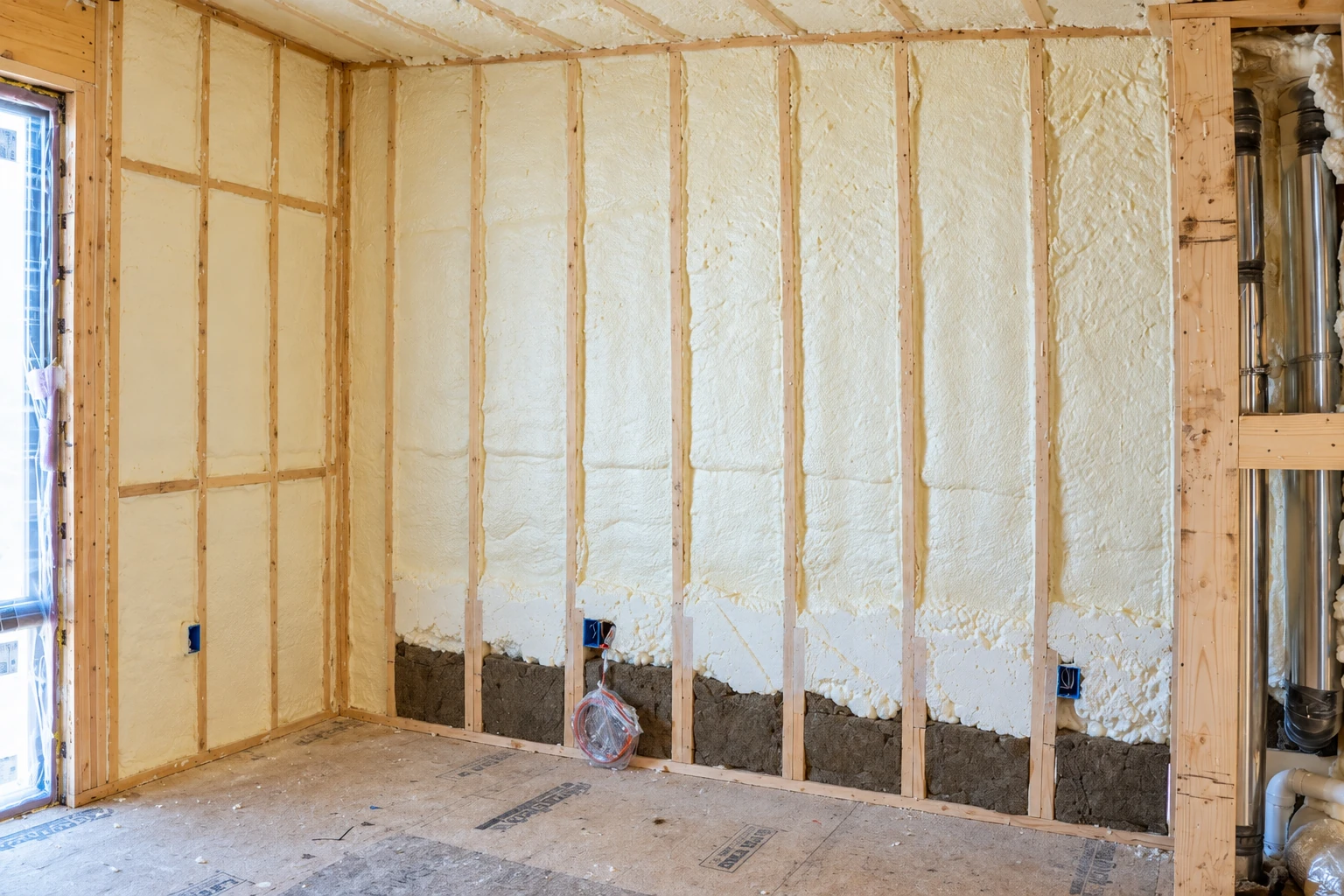
Closed-cell foam insulation is a spray foam that sets into a dense, hard layer that blocks moisture. In Los Banos we use it where a house needs insulation that also seals out air and won't soak up water, like the floor edges over a crawl space or the walls of a metal shop.
Most calls about it start with a cold floor, a damp crawl space or a shop that drips. Closed-cell is one answer, and not always the right one, because it costs more than open-cell foam and more than sealing the gaps and topping up what's already in the attic. The price moves with how much area we cover, how thick the foam goes, what has to go over it and how hard the space is to reach. The schedule turns on how long you need to be out of the house while it cures, and on the weather, since foam needs the right temperature and dry surfaces to spray well. Your estimate puts each part on its own line, so you can see what moves your number.
How do you know if closed-cell foam is worth a look?
Cold floors over the crawl space
If the floors stay cold in winter and the edges of the room feel drafty, air is usually getting in around the rim joist, the board that runs around the edge of the floor framing. Left alone, that draft keeps pulling cold air in and shows up on the power bill every winter.
Damp, musty wood underneath
Dark or musty wood along the crawl space edges usually means moisture is getting in where the framing meets the foundation. Batts stuffed in there hold that damp against the wood, so the longer it waits, the worse the wood gets.
A metal shop that drips
Water beading on the inside of a metal roof or wall is warm, damp air hitting cold metal. It rusts fasteners and soaks whatever you've got stored underneath, and it happens again every time the weather turns.
How we put in closed-cell foam insulation
I start by going over the space myself, because foam sprayed over a leak, a wet spot or bad wiring just seals the problem in. Anything like that gets fixed or flagged before we quote the foam. Closed-cell makes sense where you want a hard layer that stands up to damp, like rim joists or spots that may get wet, so that's where I'll point it. On the day, we cover and protect everything around the work area, seal the gaps, spray the foam and put on the cover that spot needs. We plan that cover and your time away from home as part of the job, and when we leave, your house looks the way we found it, just with the work done.
Closed-cell isn't the answer everywhere. Where moisture isn't the worry, like a big roofline or interior walls, open-cell foam insulation expands more and covers more space for the money, and in a lot of attics, sealing the gaps and topping up the loose fill does the job for less unless the ductwork lives up there. For shops, barns and metal buildings, our commercial insulation work leans on closed-cell often, because bare metal sweats.
Rim joists and crawl space edges
This suits raised-floor houses with cold floors or damp along the foundation, since the foam holds up where the wood can get wet. The area is usually small, so the higher price of closed-cell is easier to justify here.
Under the roof with ducts in the attic
If your ductwork runs through the attic, foam under the roof deck brings it inside the insulated space instead of leaving it to bake in summer. It works when the roof is sealed tight and winter moisture is kept in check, so I look at both before I recommend it.
Metal buildings and shop walls
Bare metal sweats when warm, damp air hits it, and closed-cell sticks to the metal and won't take on water. It suits shops and storage buildings where you want the drips to stop and the inside to hold its temperature.
Get a written closed-cell foam estimate, line by line
We get back to you within one business day to set a time for me to come out. The estimate is free and done at your place, with no obligation and no pressure to book. I look at the space in person and write the job up line by line.
(209) 270-5807What changes a closed-cell foam insulation job in Los Banos
Two state rules shape this work here. The California Energy Code splits the state into sixteen climate zones, and its standards for a house's walls, roof and floors, and for its windows and doors, depend on the zone, so a Los Banos home is held to the standards for its own zone. California also lets someone work without a license only on jobs up to $1,000 that need no permit, and only if they have no employees, so anyone who shows up with a crew to spray foam in your house needs a license.
Around here we see a lot of raised-floor houses with crawl spaces, attics nobody has looked at in years, and farm shops and metal buildings that sweat. We find the same houses and shops on jobs in Dos Palos and Gustine, and we handle them the same way, checking for damp before any foam goes on.
What happens when you call about closed-cell foam in Los Banos?
Call or send the form
Call (209) 270-5807 or use the form, and we'll get back to you to set a time for me to come out. Our phone hours run into the evening every day of the week.
I look over the space
I check the area, note anything that needs fixing before foam goes on, and give you a written estimate with each part of the job on its own line. You'll see the foam, the cover and any repair priced separately, and what can wait.
We prep, seal, then spray
We set the day with you around the time you'll be out of the house. Prep and sealing come first, then the foam, then the cover it needs.
I walk the job with you
When the work is done, I walk the finished space with you so you can see the foam and the cover. We clean up and leave the house the way we found it.
Frequently asked questions
Why does closed-cell foam cost more than open-cell foam?
Closed-cell costs more because it expands less, so it takes more foam to fill the same space. For that you get a hard layer that won't absorb water, slows moisture at a normal thickness and gives about R-6 per inch, R-value being how well insulation slows heat. Your estimate lists the area, the thickness and the cover over the foam on separate lines, so you can see where the money goes.
How long do we have to stay out of the house after spray foam insulation?
EPA guidance says to stay out until the foam has finished curing and the house has been aired out and cleaned. Some foam makers recommend 24 hours before you come back, but it can vary by product, so ask for the number on the foam going into your house. Kids and pets stay out for the same time.
Does closed-cell spray foam have to be covered with drywall?
Usually, yes, where it faces the rooms you live in. Spray foam generally needs an approved thermal barrier between it and the inside of the house, a fire-resistant cover that's most often drywall. In some attics and crawl spaces a lighter ignition barrier may be allowed instead, so the cover depends on where the foam is and how you use that space.
Who is allowed to install spray foam insulation in California?
A licensed insulation contractor. California's Contractors State License Board describes an insulation contractor as one who installs any insulating material for temperature or sound control. The small-job exception covered above doesn't apply to anyone working with a crew.
What is the best way to insulate rim joists?
Spray foam is usually the simplest way, because it seals the air leaks and insulates the rim joist in one step. Closed-cell does it with a thinner layer than open-cell, since a thinner coat already counts as an air barrier.
Does closed-cell foam make walls stronger in an earthquake?
It can. Closed-cell foam sprayed into the framing cavities of a wall substantially raises its racking strength, how well it resists being pushed sideways, and an energy department guide counts that as a plus where earthquakes are a concern. It's one more reason to consider it when your walls are already open.
Los Banos, CA
Get your closed-cell foam job priced
Have the areas you want insulated in mind, and whether that's an attic, a crawl space or a shop, so I come out ready to look at the right spots.